
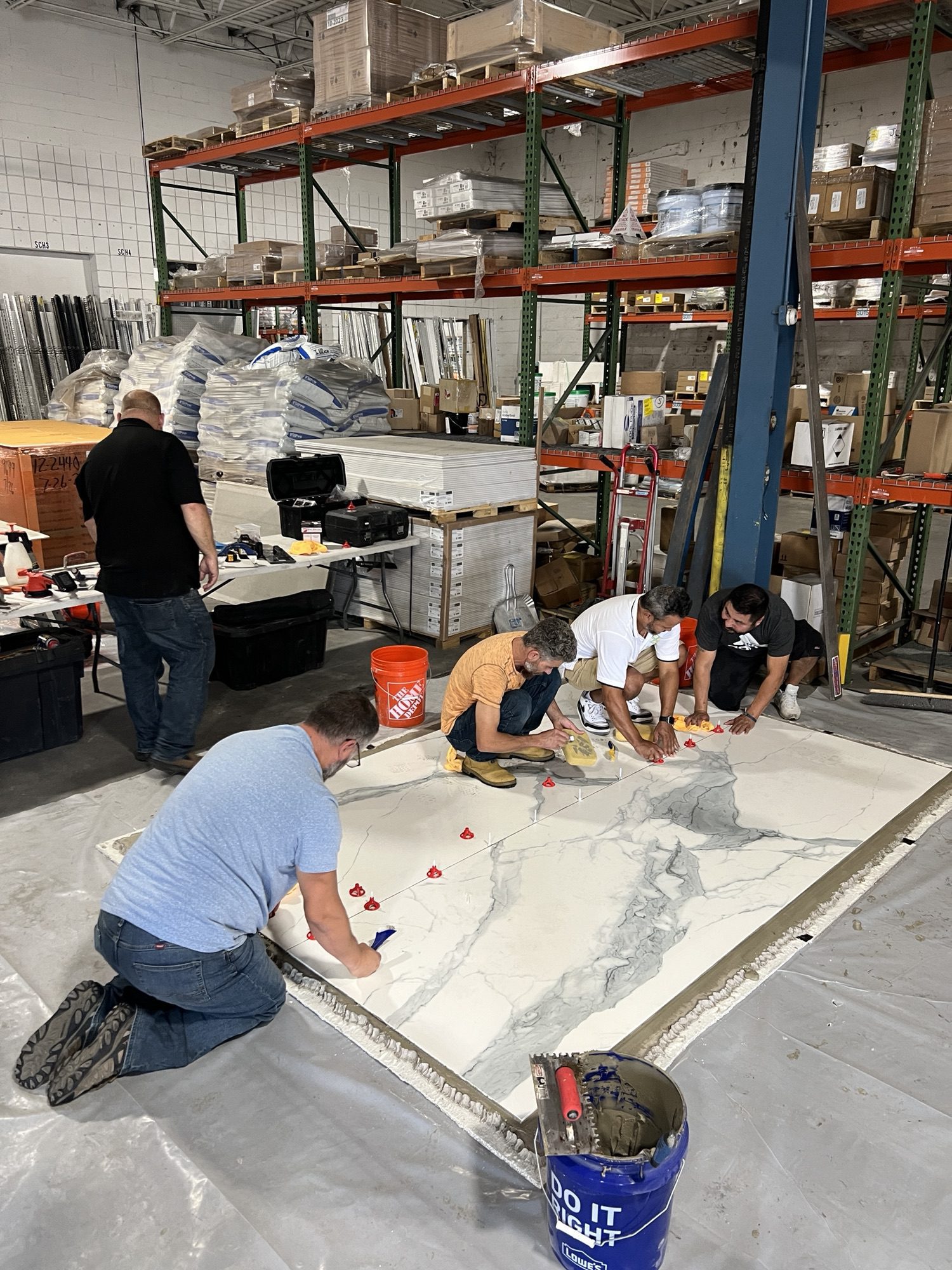
Large porcelain tiles — sometimes called porcelain slabs — look incredible when they’re installed right. Fewer grout lines, a clean modern look, and a finish that holds up for years. But these aren’t regular tiles. They’re bigger, heavier, and a lot less forgiving. If the installer doesn’t know what they’re doing, you’re looking at cracked slabs, failed bonds, and expensive problems.
Why Large Porcelain Tile Is Different
We’re not talking about 12×24 subway tile here. Large format porcelain can go up to 10 feet by 5 feet. That size changes everything — how you handle it, how you cut it, how you set it.
A traditional tile can flex a little. A gauged porcelain panel won’t. If the substrate isn’t perfectly flat, the slab cracks. If the mortar coverage isn’t right, you get hollow spots that lead to failure down the line. If two guys try to lift a slab without proper suction equipment, it snaps.
This is why large porcelain tile installation isn’t a DIY project — and it’s not a job for a general contractor who “also does tile.” It requires specific training, the right tools, and experience working with these materials. The National Tile Contractors Association (NTCA) offers hands-on training specifically for this type of work because the industry recognizes how different it is from standard tile installation.
What Can Go Wrong Without a Qualified Installer
A lot. Here’s what we see when large format tile is installed by someone without the right training:
Cracked slabs during handling. These panels are thin relative to their size. Without proper suction cups, transport frames, and at least two trained people moving each piece, they break before they even hit the floor.
Lippage. That’s when tile edges don’t sit flush. On a 12-inch tile, a small variation might not matter. On a 5-foot slab, even a tiny substrate imperfection shows. The floor has to be flat — not just “close enough.”
Bond failure. Large format tile requires specific mortar and application methods. You can’t just back-butter it like a regular tile. The ANSI standards call for a minimum of 95% mortar coverage in wet areas and 80% in dry areas. Miss that, and tiles start popping off.
Bad cuts. You can’t score and snap a porcelain slab. You need rail saws, specialized blades, and the skill to make clean cuts on a piece that costs hundreds of dollars. One bad cut is an expensive mistake.

What Proper Installation Looks Like
There’s a reason the NTCA offers hands-on training specifically for gauged porcelain tile panels (ANSI A108.19). It’s a specialized skill set that covers:
- Substrate preparation — the surface has to be flat to ANSI standards before any tile goes down
- Correct mortar selection — modified dry-set or improved modified dry-set cement mortar, applied using the right trowel size and technique
- Full mortar coverage — thin-bed method with back-buttering to eliminate voids
- Proper handling equipment — suction cups, transport frames, and at least two people per slab
- Leveling systems — to keep lippage tight across large surfaces
- Precision cutting — rail systems and diamond blades designed for gauged porcelain
If your installer can’t explain these steps, that’s a red flag.

Our Training and Credentials
I first completed NTCA’s gauged porcelain tile panel installation training in August 2024 in Boston. That course covered everything from substrate prep to cutting techniques to the specific adhesives and setting methods these slabs require. It changed how we approach every large format job.
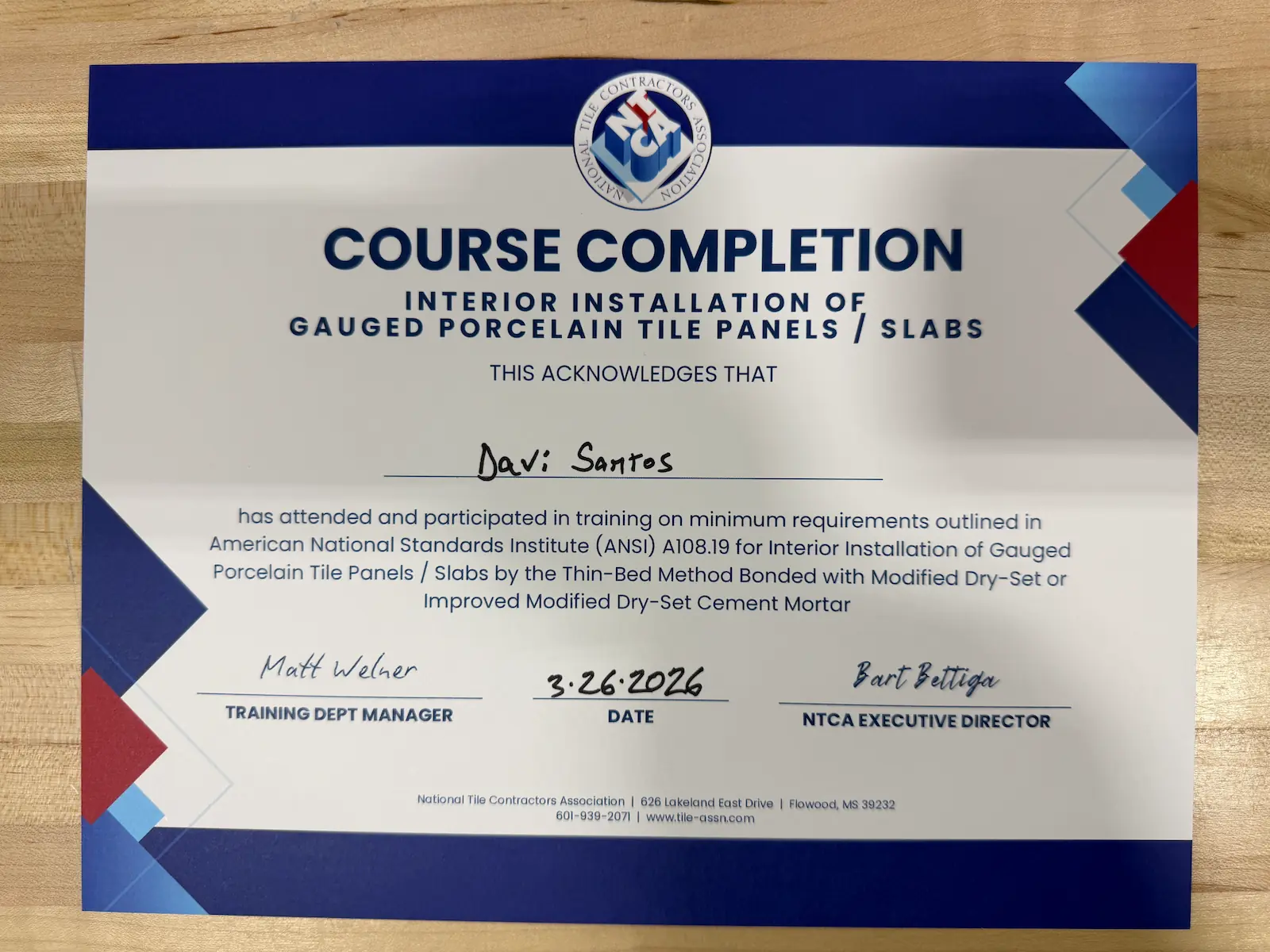
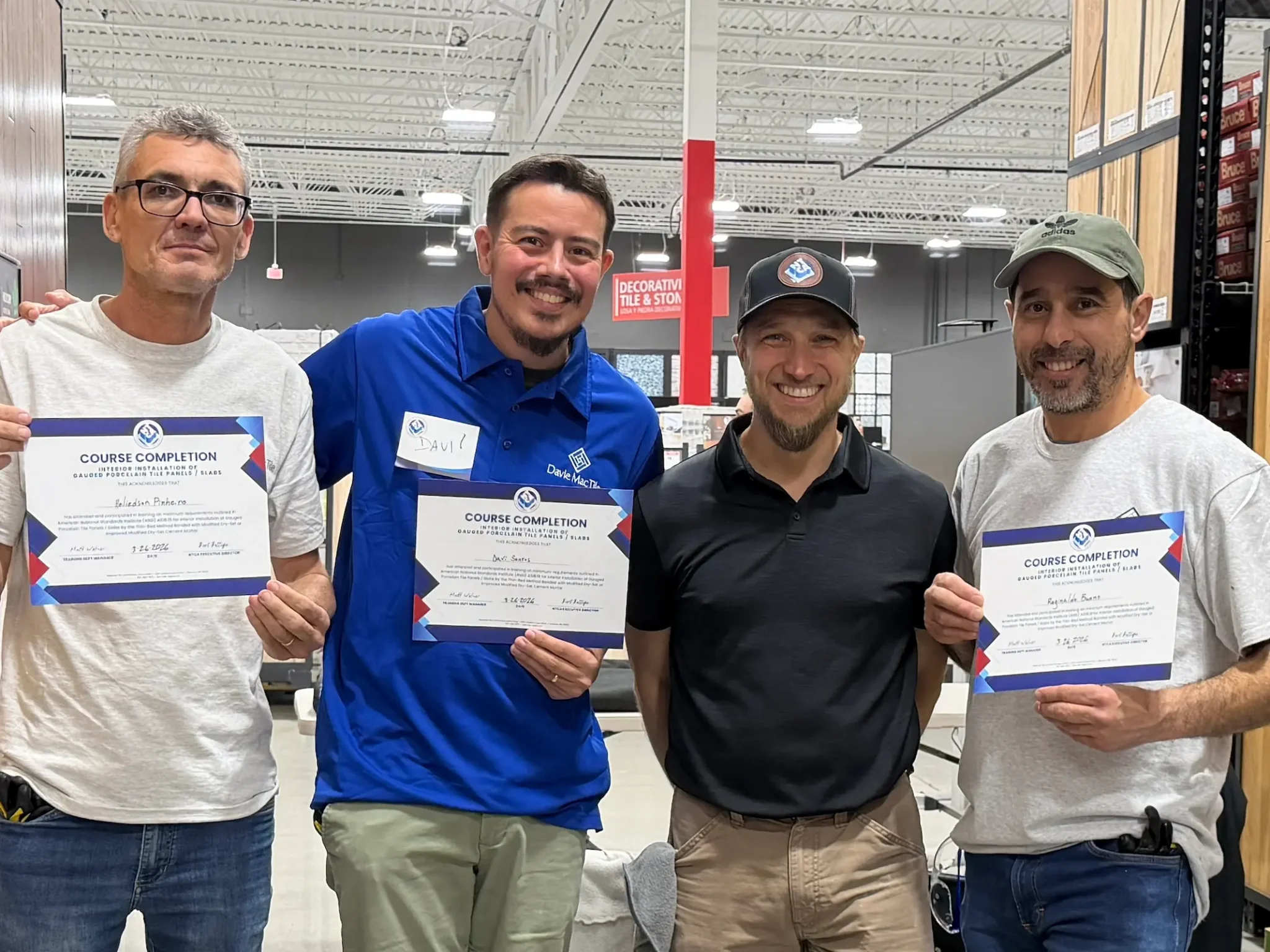
In March 2026, I went back — and this time I brought two of our installers with me. All three of us completed the course and are now certified under ANSI A108.19 standards for interior installation of gauged porcelain tile panels and slabs using the thin-bed method.
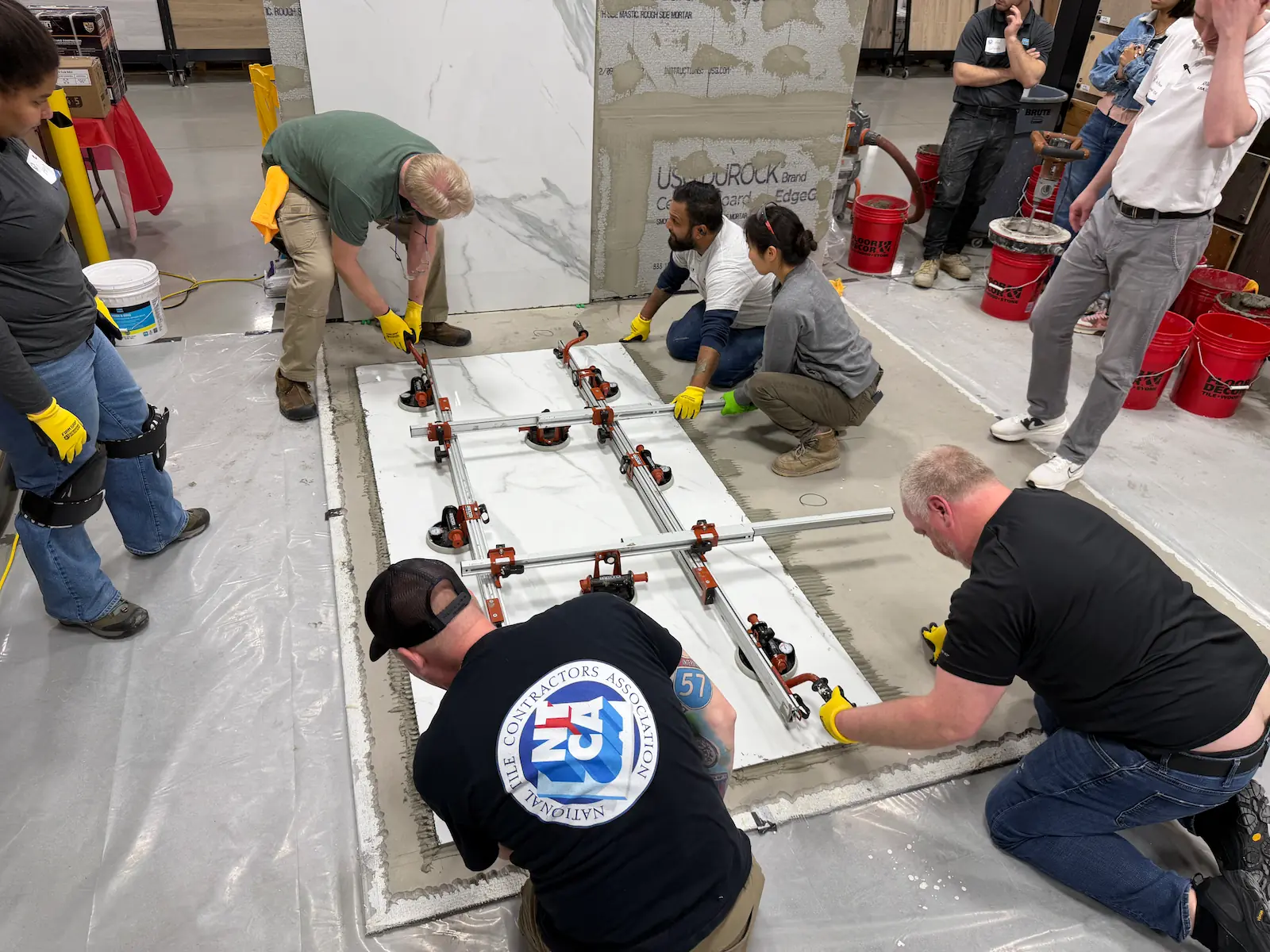
Why go twice? Because the first time was about sharpening my own skills. The second time was about making sure our whole crew is trained to the same standard. When we show up to your project, it’s not just me who knows how to handle these materials — everyone on the team does.
That’s on top of 25 years of tile installation experience, CTI certification (#1344 through CTEF), NTCA membership, and Schluter and Laticrete certifications. We don’t just say we’re qualified — we put in the work to prove it.
Choosing the Right Installer for Large Porcelain Tile
If you’re considering large format porcelain for your home, here’s what to ask before hiring anyone:
Have you been trained specifically on gauged porcelain panels? General tile experience isn’t enough. These materials have their own set of ANSI standards for a reason.
Can you show proof of certification? Look for NTCA training, CTI certification, or manufacturer certifications from companies like Schluter or Laticrete.
What equipment do you use for handling and cutting? If they don’t mention suction cups, rail saws, or leveling systems, they’re not set up for this work.
What’s your mortar coverage process? They should be able to explain thin-bed method, back-buttering, and the coverage percentages required by industry standards.
At Davie Mac Tile, we’re happy to answer all of these questions — because we’ve done the training and have the certifications to back it up.
Ready to Talk About Your Project?
If you’re planning a project with large format porcelain tile in the Greater Boston area, we’d love to hear from you. Whether it’s a bathroom floor, a shower surround, or a feature wall, we have the training and experience to install it right.
Call us at (508) 728-9775 or visit our contact page to request a free estimate.