
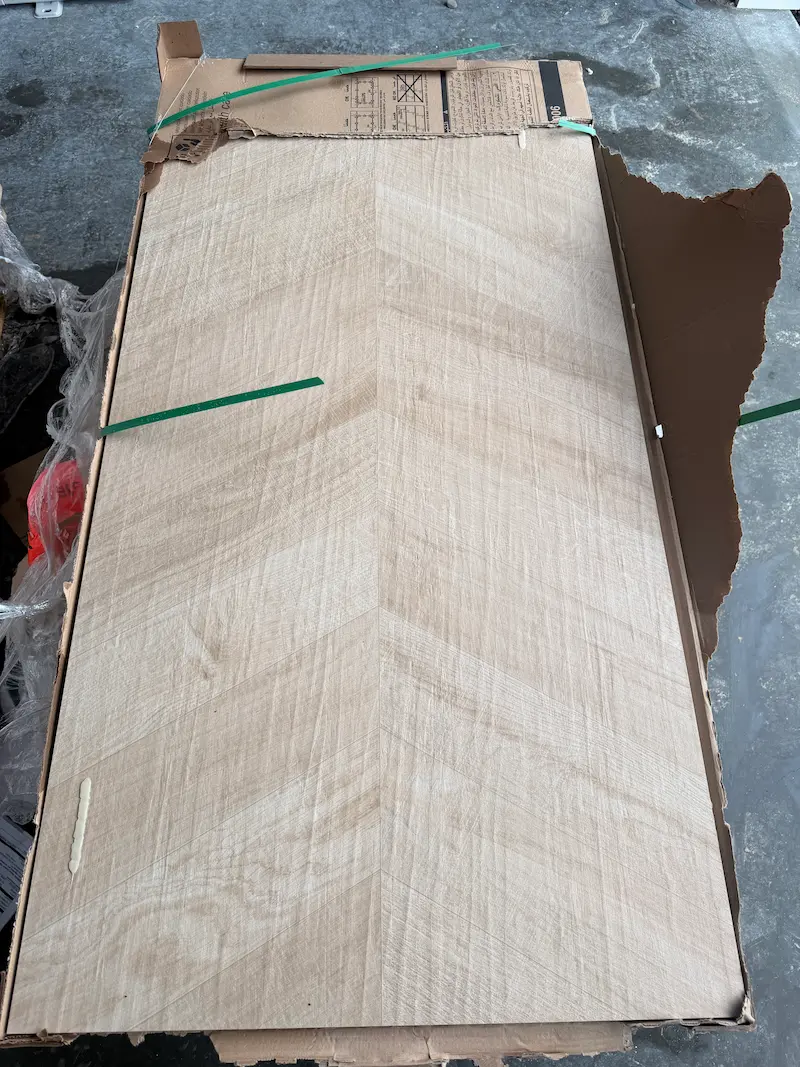
We’re in the middle of a whole-house tile job in Dover right now. Seven bathrooms, close to 3,000 square feet of floor, deliveries coming almost every week. The master shower walls are getting a large-format porcelain with a chevron pattern on the face, and before we set the first tile the homeowner has to make a call most people never think about: chevron tile direction. Does it point up or down?
It sounds small. It isn’t. The direction changes how the shower looks and how water moves on the wall, and once the first tile is on, there’s no switching.
What’s actually being decided
With this kind of tile, the chevron is printed on each piece. It isn’t built from small tiles cut and set at an angle. So “up or down” comes down to how every tile is turned, and the V has to line up from one tile to the next so the pattern reads as one continuous arrow across the wall. That means the layout gets planned before anything gets mixed. Every wall in the shower, and the niche if there is one, has to follow the same direction or the whole thing looks like a mistake.
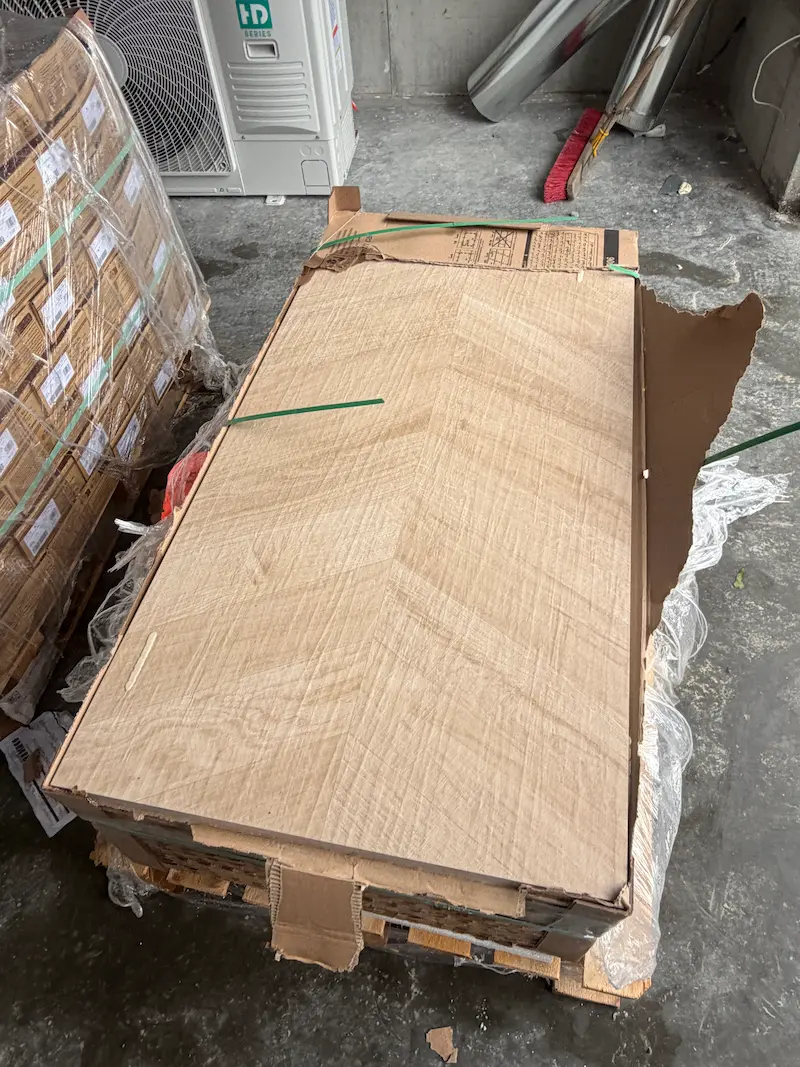
Chevron tile direction: what I recommend, and why
After 25 years of setting tile, I recommend pointing the chevron up on shower walls. My reason is water.
When the V points up, every grout joint slopes downhill from the peak, outward and down, the same direction water runs. The wall sheds water along the joints. When the V points down, every joint slopes toward one low point in the middle of each row. Water gets funneled into that spot instead of running off. A properly waterproofed shower will handle either, but I’d rather have the pattern working with the water than against it.
There’s a second reason, and it’s about how the room feels. Your eye follows the arrow. Chevron pointing up lifts the wall and makes the shower feel taller. Pointing down pushes the eye toward the floor. In a shower, up almost always wins.
What it means for the install
Direction is decided first, layout second, tile third. I dry-fit the pattern, check that the V meets cleanly at every joint and confirm the arrows on every wall point the same way before any thinset goes on. On a large-format tile, the flatness of the wall matters too, so the substrate gets checked and corrected before the first piece is set. Getting the direction right is a five-minute decision. Getting the layout right is what makes it look like it belongs there.
Chevron tile direction is exactly the kind of detail that separates a shower that looks good on day one from one that still looks right in ten years. That’s the standard I hold on every shower tile installation, including this one in Dover.
If you’re putting chevron in a shower
Decide the direction before the installer shows up, and ask them to walk you through the layout before the first tile goes on. My vote is up. If your installer can’t tell you why they’d go one way or the other, that’s worth noticing.

Davie Mac Tile installs showers across Greater Boston, including Dover and MetroWest. Davi Santos is a CTI Certified Installer and NTCA member with 25 years of experience. Call (508) 728-9775 or see our shower tile installation page.