

The Role of Backsplash Lighting in Enhancing Interior Design: A Critical Aspect of Kitchen Aesthetics
Lighting plays an essential role in interior design, especially when it comes to highlighting key features like backsplashes in a kitchen or bathroom. The interplay of light and design elements can dramatically influence the overall ambiance of a space, making it either warm and inviting or cool and sophisticated. In this article, we’ll delve into the importance of backsplash lighting in enhancing the backsplash designs showcased in the provided images and explore how lighting can alter the perception of texture, color, and layout in a kitchen setting.
The Impact of Lighting on Design
Backsplashes serve as a focal point in kitchen design, providing both functionality and aesthetic appeal. The right lighting can enhance these features by bringing out the subtleties in texture, the richness of colors, and the intricacies of patterns. Conversely, poor lighting can flatten the appearance of a backsplash, making it look dull and uninspiring.
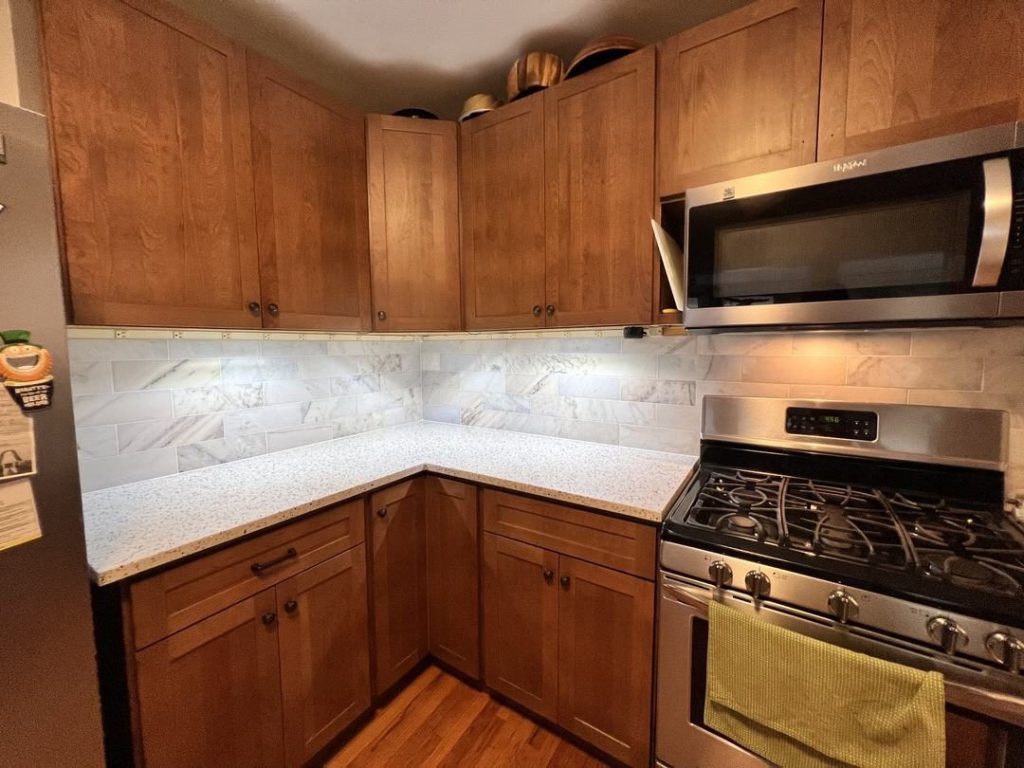
Marble Subway Backsplash and Lighting
In this image, the kitchen features a marble subway tile backsplash. Marble, known for its natural veining and luxurious appeal, requires careful lighting to truly shine. The under-cabinet lighting casts a soft, even glow across the marble tiles, highlighting the subtle variations in color and texture. This lighting choice accentuates the natural beauty of the marble, making the space feel elegant and timeless.
However, there is a noticeable difference in lighting between the cabinet area and the stove. The under-cabinet lighting creates a warm and even illumination, but the lighting near the stove is somewhat uneven and dimmer. This slight inconsistency detracts from the otherwise cohesive look of the space. While the overall effect remains appealing, adjusting the lighting in the stove area to match the rest could create a more balanced and harmonious design.
Without adequate lighting, marble’s natural veining might go unnoticed, reducing its visual impact. As renowned designer Kelly Wearstler often emphasizes, “Lighting can make or break a space.” In this case, the lighting successfully enhances the marble’s natural attributes, adding depth and dimension to the kitchen.

Glass Tile Mosaic Backsplash
The second image showcases a kitchen with a glass tile mosaic backsplash. Glass tiles are highly reflective, and the choice of backsplash lighting can significantly influence their appearance. In this setup, the under-cabinet lighting creates a dynamic interplay of light and shadow across the glass tiles. The reflective surface of the glass tiles captures and amplifies the light, adding a sense of brightness and energy to the space.
Famous interior designer Jonathan Adler is known for his bold use of materials and lighting. He often states, “Lighting should not just illuminate; it should inspire.” The lighting in this image does just that by transforming the glass tile mosaic into a vibrant, shimmering backdrop that draws the eye and adds a modern flair to the kitchen.
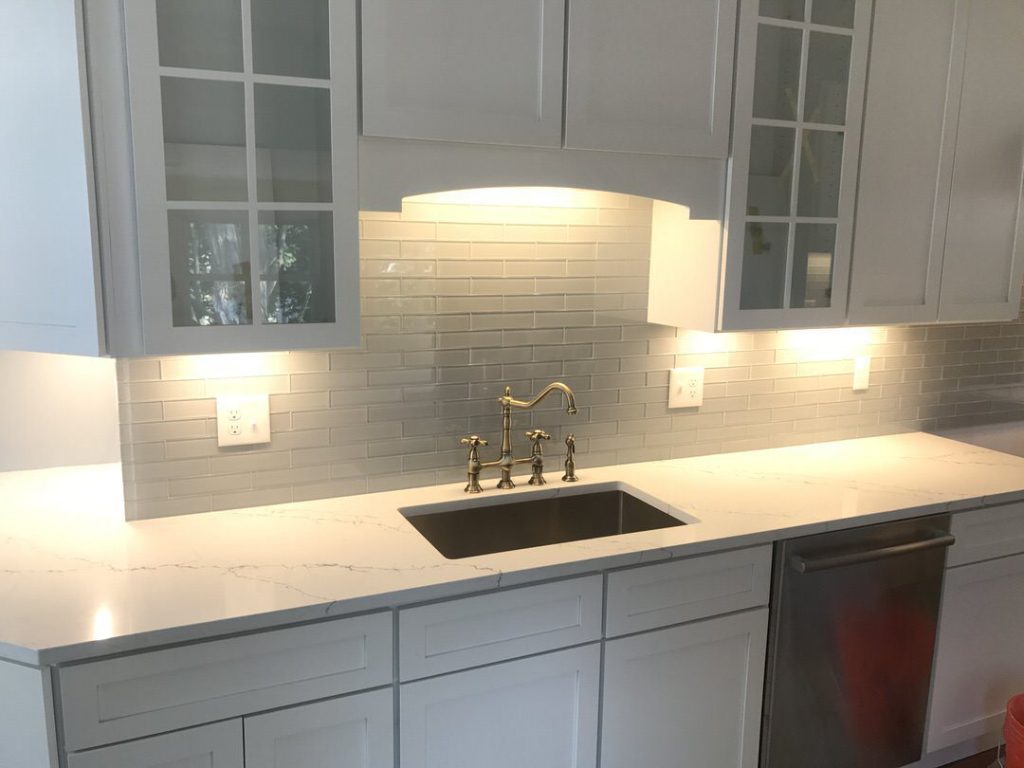
Glass Subway Tile Backsplash with Subtle Hues and Lighting
In the third image, a kitchen features a glass subway tile backsplash in soft, muted tones. The backsplash lighting in this space is gentle and diffused, which complements the subtlety of the tile colors. The result is a serene and calming atmosphere, perfect for a kitchen designed to be both functional and relaxing.
The diffused lighting reduces harsh shadows, ensuring that the glass tiles maintain their soft, ethereal quality. This approach aligns with the philosophy of designer Ilse Crawford, who believes that “Design should engage the senses and make you feel.” The backsplash lighting here does just that, creating a space that feels welcoming and peaceful.

Herringbone Tile Backsplash and Lighting
The final image presents a kitchen with a herringbone tile backsplash. The herringbone pattern is a classic design that adds visual interest and movement to a space. In this instance, the backsplash lighting is strategically placed to emphasize the pattern, casting shadows that enhance the three-dimensional effect of the herringbone layout.
This use of lighting aligns with the principles advocated by lighting designer Tom Dixon, who emphasizes the importance of lighting in creating drama and intrigue. By highlighting the herringbone pattern, the backsplash lighting not only enhances the backsplash but also contributes to the overall sense of depth and texture in the kitchen.
The Broader Importance of Backsplash Lighting in Interior Design
Lighting goes beyond illumination; it shapes mood, defines space, and accentuates design elements in a room. The right backsplash lighting highlights unique tile characteristics, whether it’s marble’s natural veining, glass’s reflective quality, or a patterned design’s intricate layout.
In addition to task lighting, which is essential for functional purposes, ambient and accent lighting should also be considered. Ambient lighting offers overall illumination, while accent lighting highlights specific features, like a backsplash. Combining these types of backsplash lighting creates a layered effect that adds depth and complexity to the space.
Tips for Homeowners and Designers
When planning the backsplash lighting for a kitchen, it’s important to consider the type of backsplash material and the desired mood of the space. Here are some tips to keep in mind:
- Material Consideration: Reflective materials like glass benefit from direct lighting, which enhances their brightness and shine. Conversely, matte materials like stone or ceramic might require softer lighting to prevent them from looking too flat or dull.
- Color Temperature: The color temperature of the backsplash lighting can also have a significant impact. Warm lighting tends to bring out the richness of natural materials like wood and stone, while cool lighting can enhance the sleekness of modern materials like glass and metal.
- Placement and Angle: The placement and angle of the backsplash lighting are crucial. Under-cabinet lighting is ideal for illuminating backsplashes, but the angle should be adjusted to avoid glare or unwanted shadows.
- Dimmers and Controls: Incorporating dimmers and smart lighting controls allows for flexibility in adjusting the backsplash lighting to suit different times of the day or activities.
Conclusion
In conclusion, backsplash lighting is essential in interior design, particularly for showcasing a backsplash’s beauty. Whether highlighting marble’s elegance, glass’s modern appeal, or a herringbone pattern’s classic charm, the right lighting can elevate a kitchen from ordinary to extraordinary. By understanding how light interacts with materials, homeowners and designers can create spaces that are both functional and visually stunning.
The impact of backsplash lighting on a backsplash cannot be overstated. As we’ve seen in the images provided, lighting has the power to enhance the texture, color, and overall aesthetic of a space. By carefully selecting and positioning backsplash lighting, you can ensure that your backsplash not only stands out but also elevates the entire room.
Remember, as the famous designer Richard Kelly once said, “Light is the first element of design; without it, there is no color, form, or texture.” In other words, without the right backsplash lighting, even the most beautiful backsplash can lose its impact.